
OUR STORY |
HISTORY
Philadelphia has a strong labor tradition: the first general strike in the country broke out in Philadelphia in 1835 to fight for higher wages and the ten-hour day. Philadelphia was home of the first labor council, the first labor publication and the first labor party in America. But by 1976, it was one of the dying industrial cities of the Northeast as the U.S. economy was transitioning to a low-paid, non-unionized service work economy. Today, 600,000 people, or just under one third of the population of Philadelphia, are service workers.

1976
Where ESWA Began
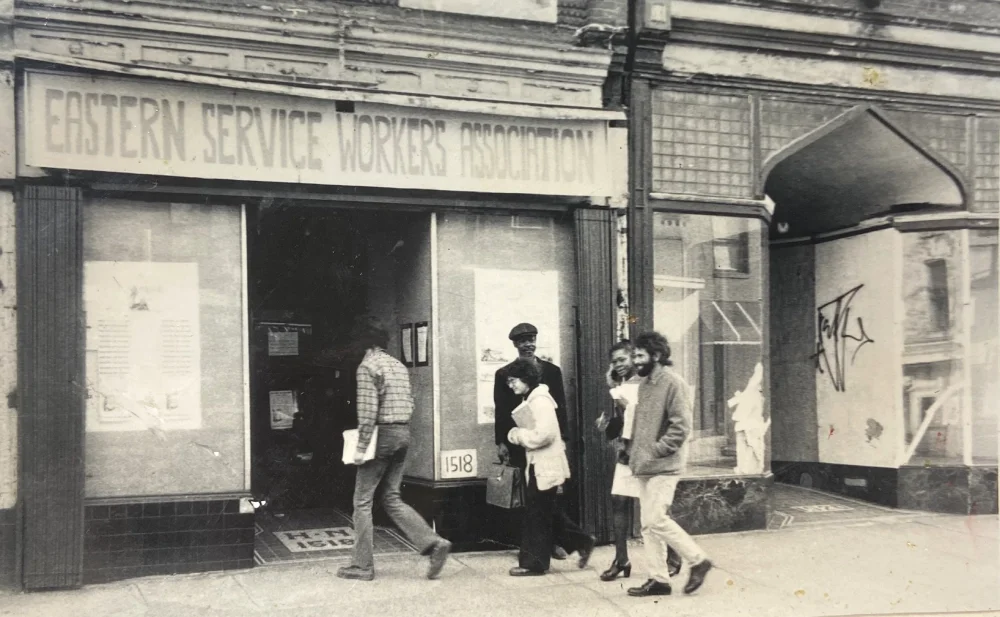
ESWA’s organizing drive began in 1976 in a donated space in the Church of the Crucifixion on 8th and Bainbridge, where it operated seven days a week. Organizers determined that South Philadelphia would be the place to begin the organizing drive in the face of the bankruptcy of the poverty programs and the destruction of the community where these conditions were felt and seen more clearly. ESWA moved to a full-time storefront office at 1518 South St. in November 1976. Formerly a men’s hat store, they kept finding boxes of old stevedores, sports hats and fancy hats, and distributed them as part of ESWA’s clothing benefit! In June 1990, ESWA acquired the building on behalf of the membership from our landlord of over 12 years.
1976
Housemeetings
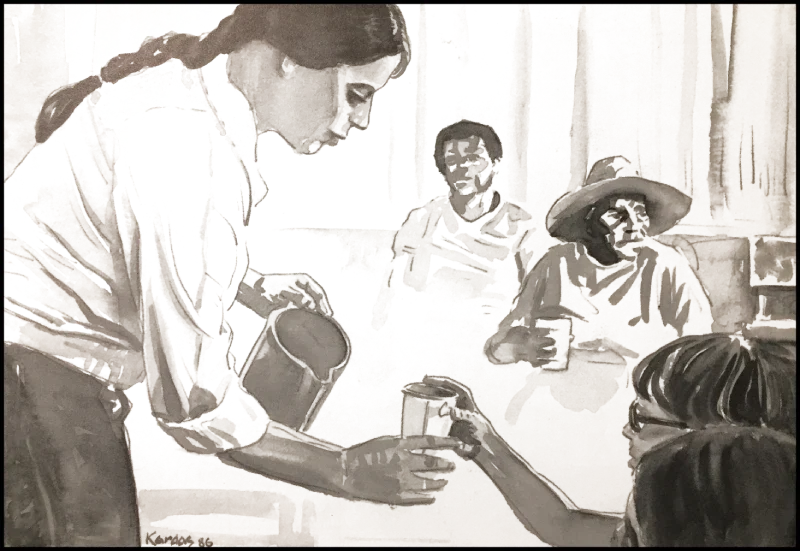
ESWA began door-to-door membership canvasses in early November 1976. Weekly housemeetings in the neighborhoods ESWA canvassed brought new members together to form the initial six-point membership benefit program, which later expanded to an 11-point program.
Illustration by Alek Kardas
1977

Workers Benefit Council Established
By the fall of 1977, ESWA members, met initially through the weekly housemeetings, began to meet in the office and established the Workers Benefit Council (WBC). Through the WBC meetings members from various neighborhoods and occupations got to know their neighbors and developed leadership in representing their organization.
1981
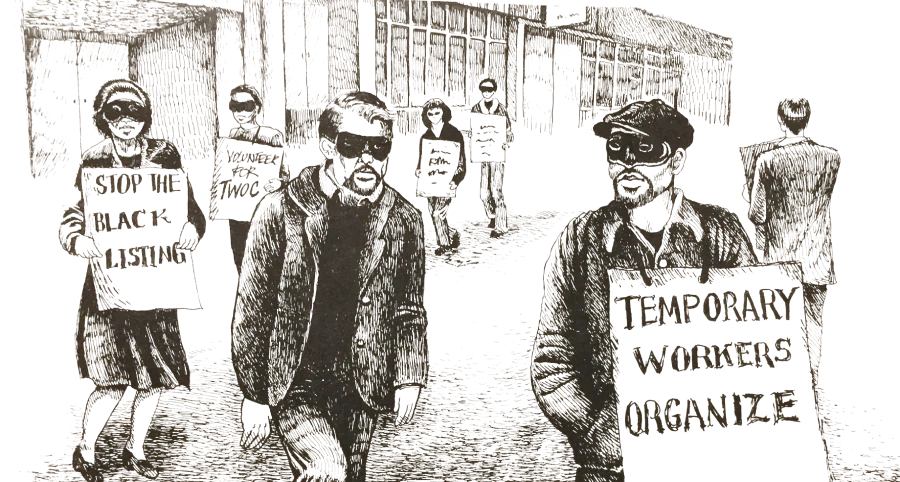
Temporary Workers Organizing
In 1981, WBC delegates and ESWA members participated in solidarity with temporary workers in New Jersey on an informational picket line at the NJ Attorney General’s Office to demand that the New Jersey Private Employment Section of the Division of Consumer Affairs enforce all existing legal sanctions governing temporary agencies.
As the number of Philadelphia temporary workers grew, the WBC inspired Temporary Workers Information Service in Philadelphia. On April 25, 1991, a Philadelphia ESWA volunteer advocate assisted a member who had been denied unemployment to win an unprecedented decision for temporary workers’ rights to obtain unemployment compensation.
1984
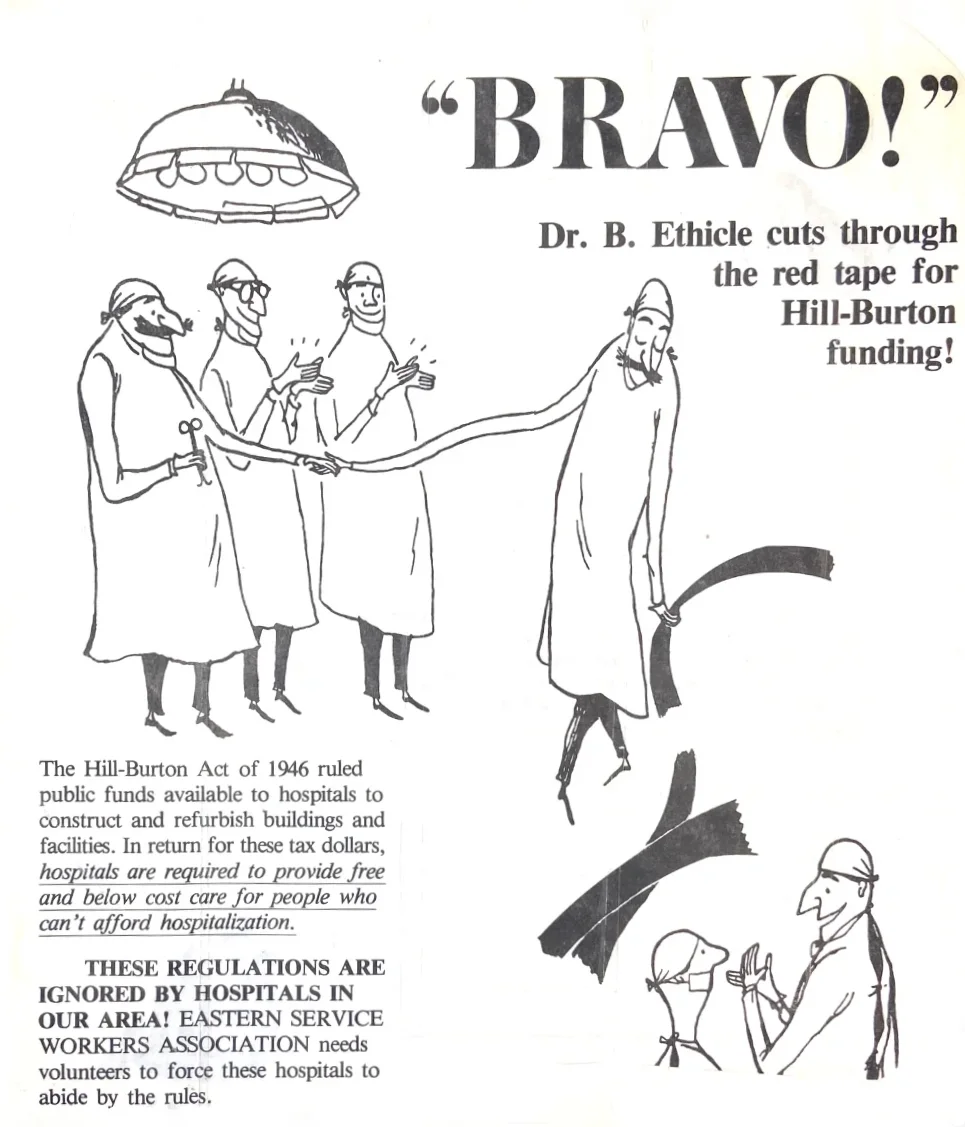
Hill-Burton Funding for Health Care
In 1984, the Workers Benefit Council began dealing with health care denials from hospitals receiving federal Hill-Burton funding that was earmarked for indigent health care but not being utilized. The WBC demanded the Chief Financial Officer of a major local hospital to appear at the WBC meeting and explain the situation. Fearful of a picket line in front of his hospital, he reported in person to the WBC meeting, which resulted in a tremendous victory when the hospital CFO agreed to make almost $400,000 in Hill-Burton funding available to provide care for low-income workers and to accept ESWA’s red membership card as the only I.D. required to request Hill-Burton care. WBC delegates then did meetings with other hospitals in the city and freed up an additional $260,000 in Hill-Burton monies for medical care and hospitalization, a total of $660,000.
1985

Philadelphia Bombing
On May 13, 1985, an unprecedented event in U.S. history occurred in Philadelphia when government authorities authorized an air attack and bombing raid on the headquarters of the organization MOVE in the Cobbs Creek section of West Philadelphia.
The bombing and firestorm resulted in 11 deaths and destroyed properties in the Cobbs Creek neighborhood, leaving 1026 homeowners, renters, boarders and tenants without homes to live in. After years of government investigations, a grand jury on July 26, 1988, stated that “there were crimes committed, but no criminals.”
In response to the many requests from members and residents in Cobbs Creek, concerned individuals formed a Citizens Relief Committee to co-ordinate a massive relief effort, while government agencies were turning people away.
ESWA’s Operations Manager contacted organizations in the region to assist with the relief effort. This inspired a series of caravans bringing supplies from sister organizations across the east coast to Philadelphia.
Citizens Relief Committee expanded to include National Freedom Flight airlifts to “Fill the Plane for Philadelphia”, organized on the West Coast by Reverend Arthur Elcombe, head of the San Francisco-based National Equal Justice Association. Those flights were donated by various airlines and brought over 30 tons of donated relief supplies from volunteer organizations throughout the West Coast.
1993
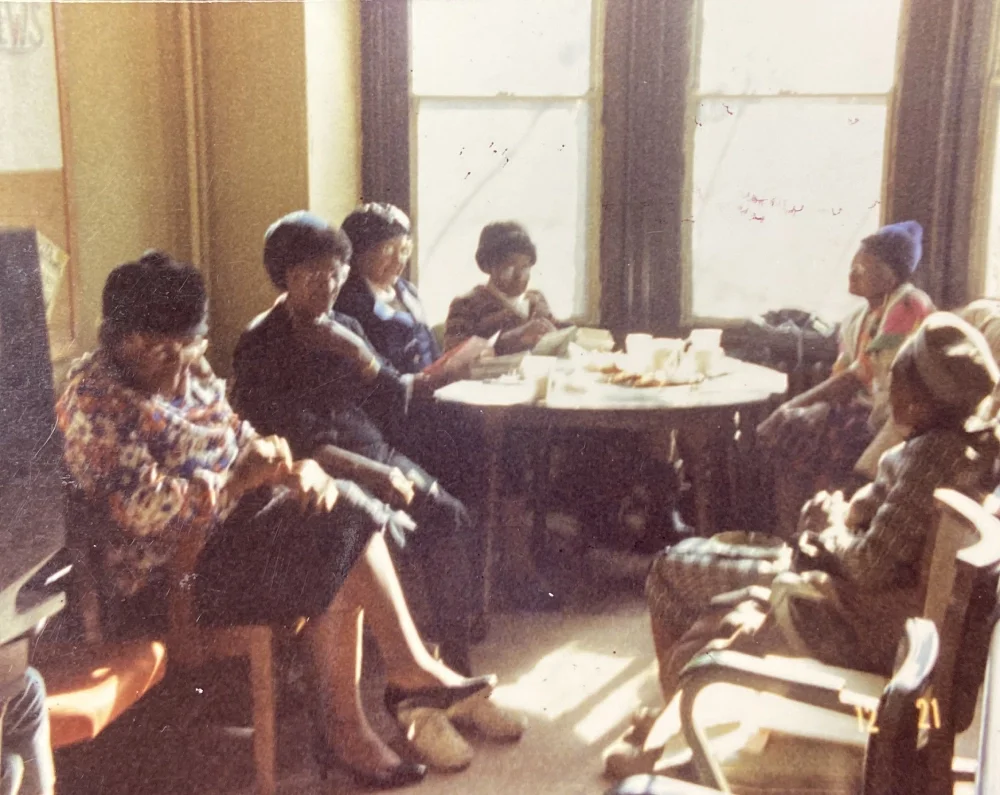
Home Health Care Workers Caucus
In December 1993 a member of the Workers Benefit Council who did in-home health care inspired the Home Health Care Workers Caucus to address the working conditions of in-home health care workers who work through agencies. The workers were making an average of $6.10 per hour, with no health benefits and work assignments based on time-task formulations, such as allowing only 20 minutes to bathe a client who is partially paralyzed because employment agencies refused to pay for any additional time needed for the care.
2000
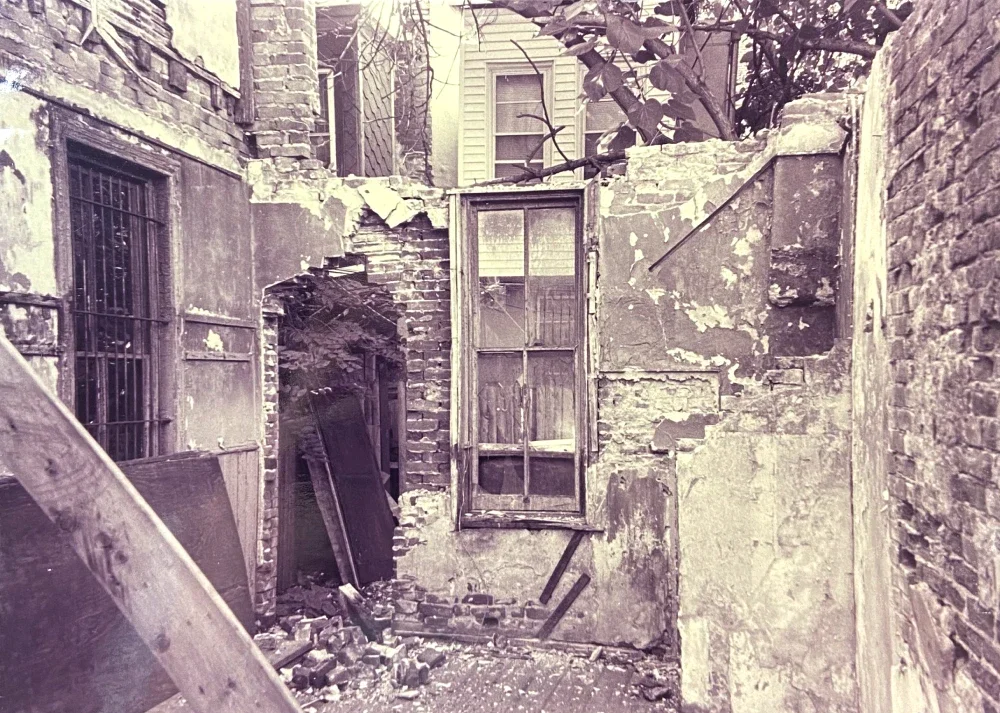
Office Central Arsoned Twice and Rebuilt
Redevelopment interests in South Philly in the 1990s were pushing low-income residents and small businesses out of the area. On February 12, 1997, ESWA Office Central suffered severe fire damage due to arson (one of three on the same block that week) that began in the abandoned building next door. Local churches and businesses provided donated space and people from all walks of life contributed and participated so that the organization’s program could continue. Rebuilding started in July 1997. On August 16, 1997, a second arson set fire to the building, destroying the rebuilding that had already begun. Despite legal challenges with the City and the insurance company, the building was rebuilt from the ground up and completed in August 2000.
2004
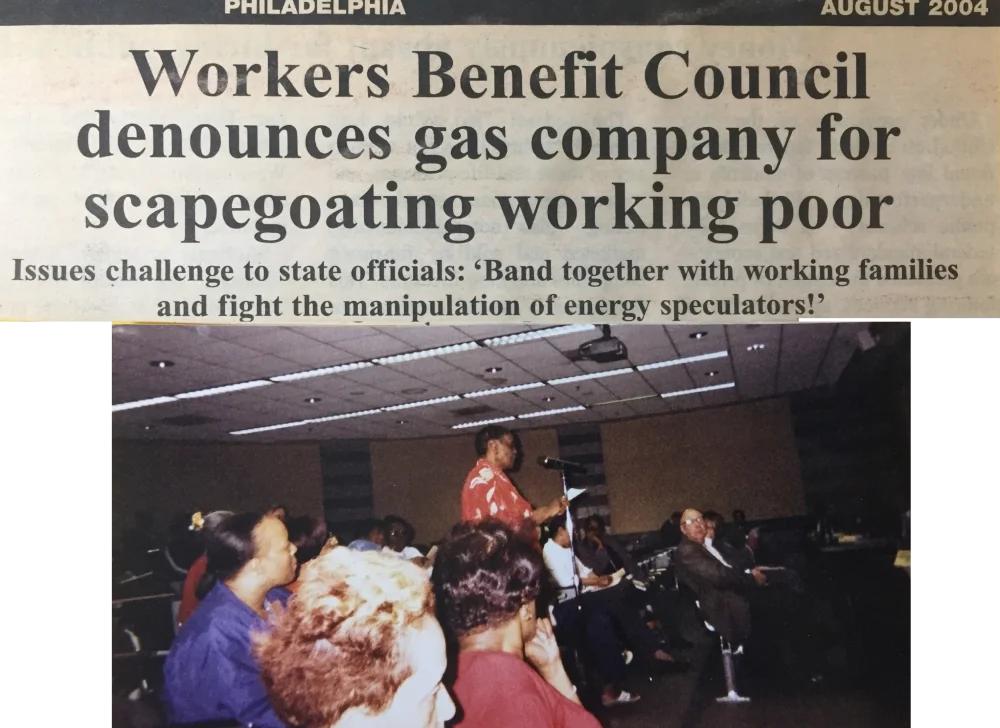
Public Hearings To Win Access to Heating
Philadelphia Gas Works is one of the largest municipally owned utility companies in the country. The city mortgaged the gas company to bondholders in the early 1990s in the face of pending bankruptcy due to a shrinking tax base and a loss of over a quarter of a million jobs that had left the city.
On May 6, 2004, an ESWA Advisory Committee member spoke at a public input hearing calling on the Pennsylvania Public Utility Commission (PUC) to join ESWA’s fight to demand living wage jobs, the prerequisite for ratepayers to be able to afford their utility bills. Twenty-eight WBC delegates at the hearing, and volunteers signing up dozens of people outside the hearing in support, were instrumental in PUC’s denial of a $47 million surcharge to the ratepayers.
WBC representatives have appeared at public input hearings throughout the decades and stopped or reduced planned increases of hundreds of millions dollars in rates.
2012
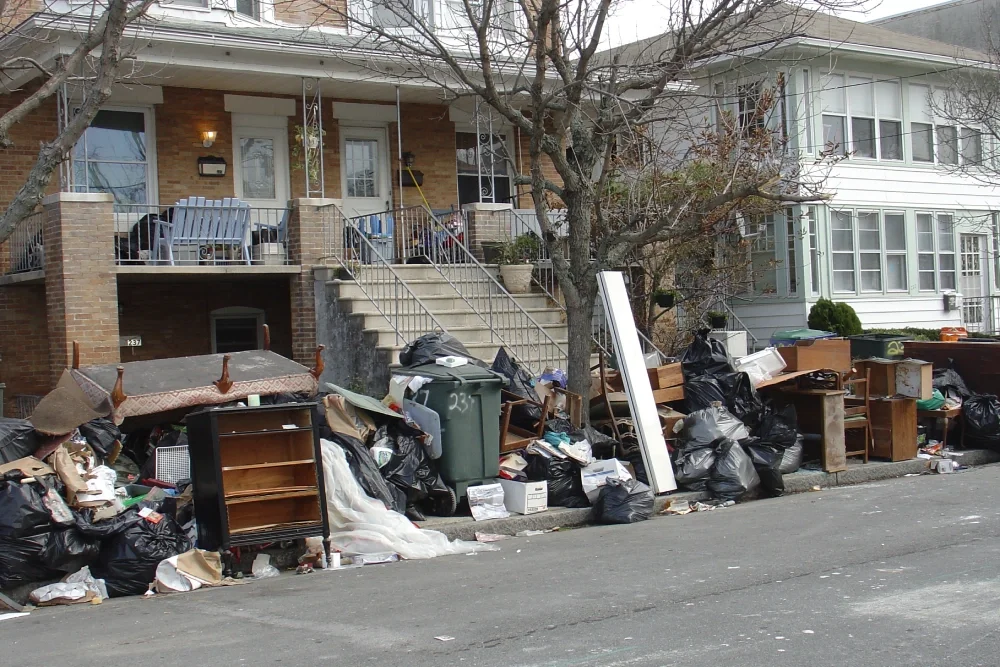
Disaster Relief
ESWA in Philadelphia has a history of providing disaster aid to sister organizations including ESWA in Atlantic County, New Jersey following Super Storm Sandy in 2012 and ESWA in Trenton, New Jersey relief when the Delaware River flooded the Island Community neighborhood.
2015
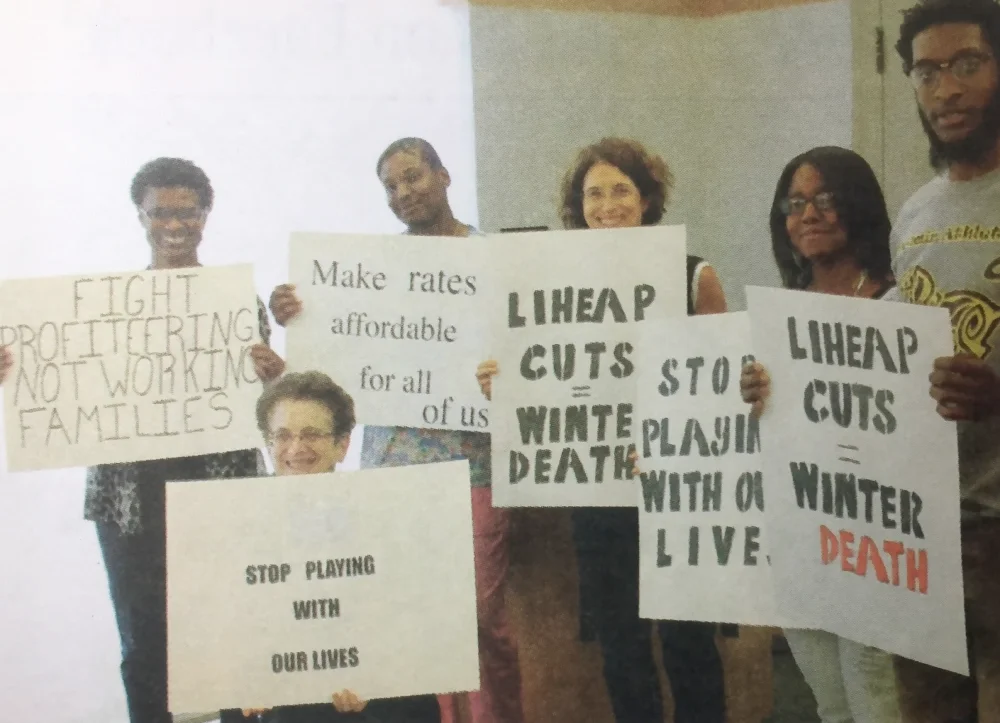
Utility Struggles for Energy and Water
Further utility struggles for access to electricity from PECO continued year after year fighting to stop or reduce rate hikes. Access to affordable water from the Philadelphia Water Department (PWD) has also required regular mobilizations to hearings. In 2015, PWD shut off over 30,000 households, stating that people were conserving water, causing a loss of PWD’s revenue they needed to pay back their bondholders, and therefore approved an $88 million rate increase. ESWA ran a community educational campaign and was instrumental in cutting $17 million off the proposed PWD rate hike.